

What Moving to a "Slower" State Taught Me About Marketing
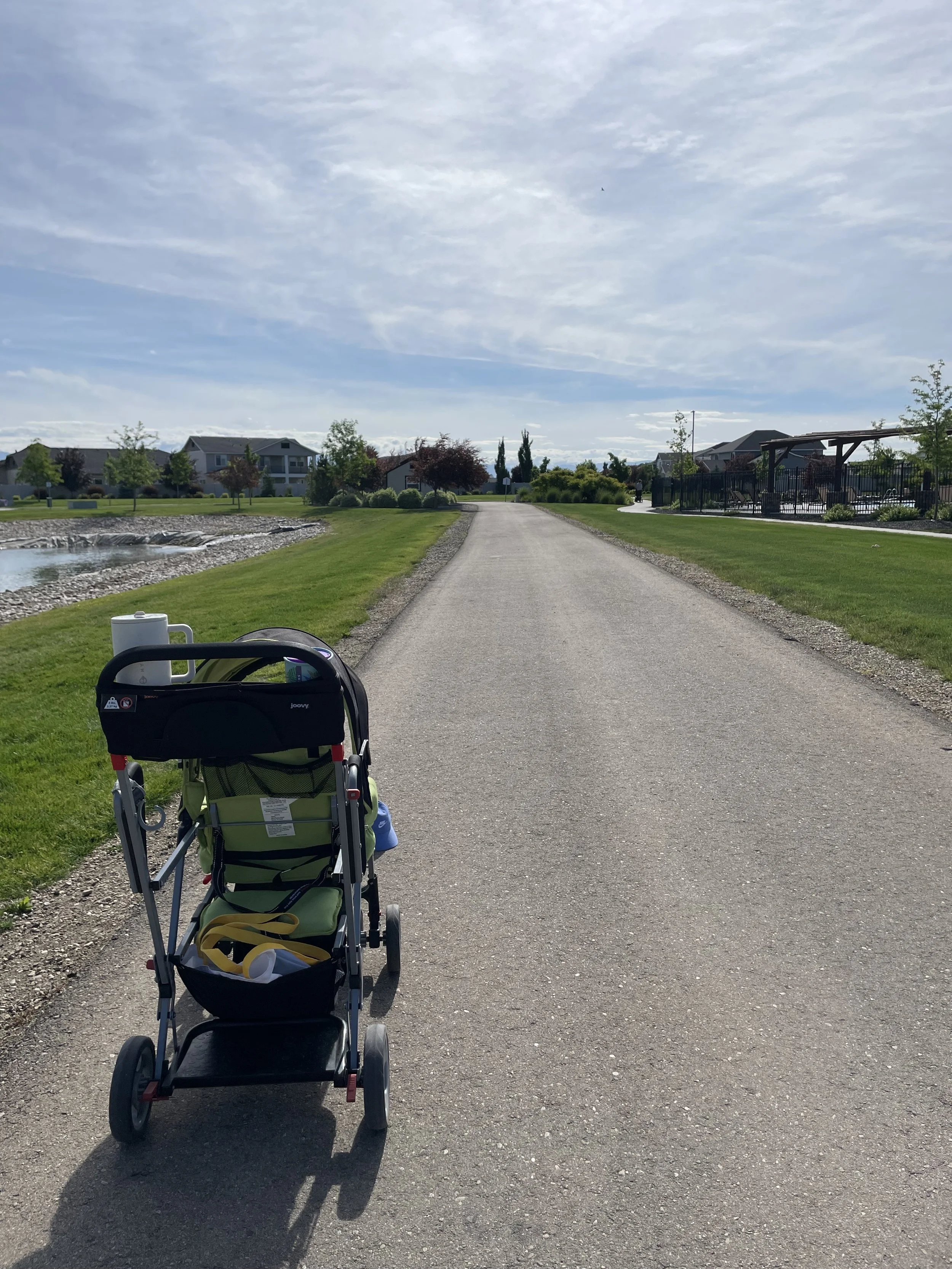
It was a regular Tuesday morning walk. I was pushing my daughter in the stroller while my son rode his balance bike beside me. We were soaking up the cool, sunny morning before it got too hot. We walked past house after house on quiet, sidewalk-lined streets with no cars zooming by and no gaps in the sidewalk where we'd have to duck into the street. There were even walking paths between backyards, so I didn't have to worry about cars at all for some parts of the walk.
I looked around, and it hit me that this felt different. Taking my 3-year-old on this bike ride shouldn't have felt like such a big, easy win, but it did. Coming from the city's busy streets, this quiet morning walk was a completely different experience.
That was one of many things I noticed after moving away from the city to Idaho, where the slower pace of life is impossible to miss. I'd spent 9 years hustling in life and in work, in the greater Seattle area, and after having my second child, something had to give. I either needed to plan my return to full-time work to keep the hustle going, or make some big shifts so our family could live on one full-time income and the part-time income from my business.
Moving to Idaho gave us so much more than a slower lifestyle, though. It opened my eyes to the fact that I was running my business the exact same way I'd been running my life, and that needed to shift, too.
The signs that a shift needed to happen
We lived in the Seattle area for 9 years. It's where we got married, started our careers, had our babies, and where I left teaching to go all-in on my business.
There's SO much I love about Seattle! The culture, the experiences, the water views, and the friends and family that are still there are things I really value and appreciate about our time in Seattle. It was one of the best places to go to grad school and start a teaching career.
But the longer we lived there, the faster life seemed to move. Things got more expensive as we started having kids, and we were making harder and harder decisions about career plans, daycare, and what the city required of us.
Those decisions didn't line up with how I wanted to raise a family. I wanted more flexibility in my work so our kids didn't have to be in full-time daycare, and that just wasn't possible with the cost of living in the city.
That's the short version of a much bigger decision, but it's the most important part: if we'd stayed, years of hustling and trying to grow income as fast as possible were in our future. The move gave us permission to slow down and be more present with our kids while they're young.
Once we started being open to the idea of moving, the timeline unfolded fast. I resigned from teaching and found out I was pregnant with my second, which made it more likely we'd need to move, or that I'd have to go back to full-time work after having my daughter. So we decided to move states when she was 6 months old.
What a slow living lifestyle actually looks like
I remember my first solo trip to Target with both kids in Idaho. Getting them out of the car in a quiet parking lot? Not stressful. Walking the aisles without weaving through crowds? Also, not stressful. My toddler could walk next to me while I had the baby in a wrap, and more than once, a stranger stopped just to say hi, not just rush past us. Then on the way home, we grabbed lunch. The whole solo outing with a toddler and a baby felt manageable, not like a small military operation.
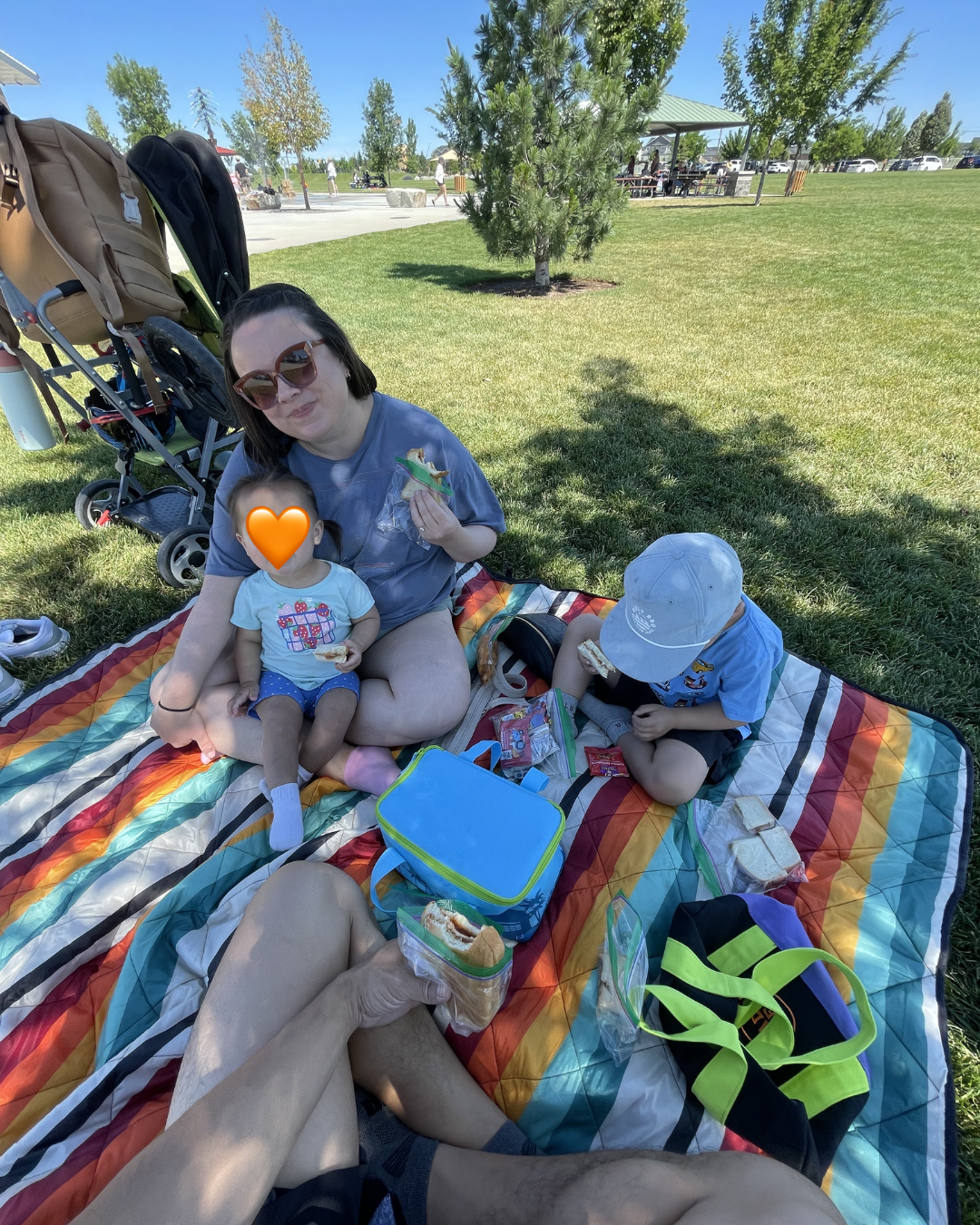
Parks were the same story. We can walk to two playgrounds near our house, and neither is ever crowded, which makes them easy spots for daily outings. When we want to explore further, there are dozens of parks tucked into quiet neighborhoods, which makes it so much easier to keep an eye on an energetic toddler while also carting around a baby.
Again, a very different experience compared to the park experience in Seattle. Since a lot of city living doesn't come with a backyard, the parks are always packed, and usually sit right off busy streets. The active, busy parks are fun sometimes, but day to day, they are stressful. Errands felt the same way. I always had to stay alert to what was happening around me.
It was those early Idaho experiences that made me realize that I'd been conditioned to navigate everyday life like errands, playdates, and walks in a constant, low-grade state of high alert. It really started to wear me down, especially when dealing with postpartum anxiety.
It takes time to regulate and enjoy the slow living lifestyle
But even with those early moments showing me what was possible, it still took time to actually settle in. My nervous system needed time to catch up to the fact that our environment was slower now and that the slower pace was a good thing, not something to brace against.
Things like calm, unhurried nights at home or unhurried days with my kids felt unsettling at first. I'd been so conditioned to the city's busy, hustle-and-bustle pace that not having it felt strange. I caught myself still trying to fill my days, still stacking every errand into one trip out of habit. Something that made sense when I had to drive further for everything in the city, but didn't need to happen the same way here.
Slowing down didn't mean I wasn't doing enough or wasn't being productive. It was exactly what I'd moved here to find. But it took a while to actually appreciate it instead of feeling guilty for it.
Slow didn't feel peaceful at first. It felt like waiting for the other shoe to drop or like it was too good to be true. My body and mind needed some time to adjust to the new pace of life.
The same is true for shifting to a long-term marketing strategy
And somewhere in that same adjustment period, I started noticing the same resistance in my business.
I was so used to fitting work into every spare moment. I was always thinking about the next level, the next post, the next sale and it took me a while to realize I didn't actually need to keep growing fast anymore. That was kind of the whole point of the move. I could start putting time and energy into long-term strategies, like blogging, Pinterest, SEO, and email marketing.
Before the move, I was burning out trying to show up on social media every day. Posting, engaging, working on client projects during naptime, and finishing up work after bedtime. My sleep was a mess, I struggled to be present with my kids, and by the time I sat down to actually work, I was already running on empty.
After we moved, I knew something had to change, because that pace just wasn't sustainable with our limited childcare setup. For a while, I kept wondering if the answer was just more childcare, which was ironic, because the whole point of building this business was to not need it. So instead, I decided to spend time learning blogging, Pinterest, and SEO to see where it would take me.
At first, it was deeply unsettling. Choosing to invest in a long-term marketing strategy didn't give me the instant feedback of an Instagram post going live. I wasn't sure I was doing it "right," and there was no visible proof of how much work I was actually putting in.
My nervous system was still wired for the old way of marketing, so starting to blog and pin on Pinterest felt too quiet and almost too still. Trusting the process was hard, and honestly, even a year later, it still takes learning and unlearning.
Pinterest is the slow living lifestyle of marketing
The biggest reason I think of Pinterest as slow marketing is that what you pin today doesn't hand you instant results. BUT the results keep working long after you hit publish. You do the work of creating and posting your pins, and while it can feel unsettling not to get that immediate feedback, once your pins gain traction, they keep earning saves and clicks for months (sometimes years) after you posted them.
Hustling on social media every day felt like running errands in the city: busy, chaotic, urgent, stressful. Pinterest's strategy feels more like the slower pace of Idaho. The creation and posting are steady and sustainable, and the results compound over time.
With Pinterest, there's no pressure to show up daily. You don't need to post photos of yourself. There's no burnout cycle waiting for you around the corner. Even if you step away for a while, the pins you've already created keep working long after you posted them.
And it's not just that the process is less stressful. The results Pinterest creates ripple out into the rest of your marketing, too. The trends you see in what performs best on Pinterest show you exactly what to focus on in your blog posts, emails, and social content. It becomes a space to learn what your audience actually wants more of, and what your highest-converting content really is, which is information you can use to be more strategic everywhere else.
What the day-to-day of long-term marketing looks like
In practice, this looks like a simple, repeatable rhythm:
write a blog post → create 10–30 pins to drive traffic to it → pull the main point or an interesting story from your blog post to write that week's email → repurpose the same content into 1–2 Instagram posts → repeat, on whatever weekly or biweekly schedule is sustainable for you.
This rhythm lets you keep showing up sustainably, trusting that the work compounds over time instead of demanding everything from you right now.
The regulated experience of slow living and marketing
These days, when I take my kids for a walk on a quiet Tuesday morning, I don't think of it as a small miracle anymore. It's just... normal. That's what slow living did for our family, and it's what slow marketing has done for my business.
Neither one happened overnight. It took time for my nervous system to stop bracing for chaos that wasn't coming. It took time to trust that quiet didn't mean I was falling behind in life or in business. But on the other side of that adjustment is a version of both that finally feels sustainable.
If you're in that hustle season right now in your life, your business, or both, I get it. And I'd gently say: the slower way can work. It might not be a change you can make overnight (it wasn’t for me), but it’s worth investing time and energy into now. It might just take your nervous system a minute to believe it.
Ready to trade hustle marketing for something slower that compounds?
If you're ready to hand off the day-to-day and let Pinterest start working for you the way it's worked for me, Pinterest Management is where we'd start. I'll handle the strategy, the pins, and the scheduling so you can stay out of the daily hustle entirely.
Not ready to hand it off yet, or want the roadmap to build this slower approach yourself first? Pinterest Account Setup gives you the strategy and plan to do it on your own timeline.